Practical guidance for every stage of your sole trader journey – from side hustle to long‑term success.













Starting as a sole trader is one of the simplest ways to begin trading in the UK, but it’s important to understand what’s involved before you start.
Key things to consider:
A sole trader is personally responsible for the business and its finances
You keep full control, but you’re also responsible for tax and record‑keeping
You’ll usually need to register with HMRC once you start earning


Top tips before you start:
Check whether a sole trader structure is right for your goals
Budget for tax from day one
Open a separate business bank account early
Keep things simple – you can refine systems later
👉 If you’re unsure where to start, getting advice early can save time and money later.
Essential start‑up tips:
Register for Self Assessment with HMRC on time
Keep records of all income and expenses from day one
Use simple bookkeeping software or spreadsheets
Understand your key deadlines
Common early mistakes to avoid:
Mixing personal and business finances
Leaving bookkeeping until the end of the year
Not setting money aside for tax
Not fully researching your options
💡 Tip: Spending a little time each week on bookkeeping prevents big headaches later.
Tips for established sole traders:
Review your income and expenses monthly
Check whether you’re claiming all allowable expenses
Monitor cash flow, not just profit
Review pricing annually to reflect rising costs
Plan ahead for tax payments
As your business grows, your bookkeeping and tax responsibilities often become more complex — regular reviews help you stay ahead.

Struggling with Tax Returns?
You’re not alone. Many sole traders find tax returns stressful, especially if bookkeeping has been left until the last minute.
Common issues we see:
Missing or incomplete records
Unclaimed expenses
Confusion over tax and National Insurance
Worry about penalties or HMRC enquiries
How to make tax returns easier:
Keep digital copies of receipts
Reconcile your bank regularly
Don’t wait until January to prepare your return
Ask for help if you’re unsure
Spreadsheets are no longer enough. HMRC’s Making Tax Digital (MTD) rules now require most sole traders to keep digital records and submit quarterly updates and if you dopn't already, you will have to soon. Beyond staying legal, the right software turns a "box of receipts" into a real-time dashboard for your business.
The Benefits of Going Digital:
Real-Time Tax Estimates: No more "January surprises"—know exactly how much to set aside for HMRC every month.
Automatic Bank Feeds: Your transactions flow directly into the software. No more manual data entry.
Professional Invoicing: Create, send, and track invoices from your phone the second a job is finished.
Claim Every Penny: Snap photos of receipts on the go so you never miss an allowable expense again.

QuickBooks Self-Employed vs. Xero: Which is right for you?
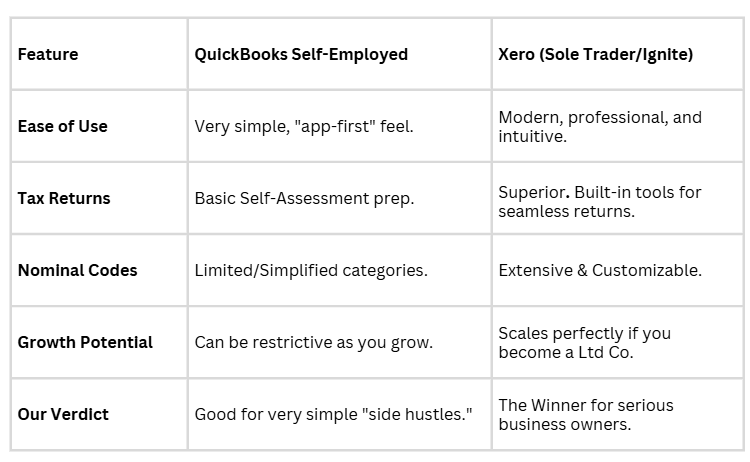
While we can work with most platforms, we have a clear favorite for our clients. Here is how the two leading packages for sole traders compare:
Why We Recommend Xero
At Cashtrak, we prefer Xero because it is built for accuracy and growth. The two biggest reasons come down to how we manage your year-end:
Detailed Nominal Codes (The "Secret Sauce" of Good Bookkeeping)
A "Nominal Code" is simply a category for your money (e.g., Materials, Travel, or Marketing).
The Problem with QuickBooks Self-Employed: It uses very broad categories. This makes it hard to see exactly where your money is going.
The Xero Advantage: Xero provides a much deeper "Chart of Accounts." This allows us to track your spending with precision. For example, instead of just "Travel," we can see "Fuel," "Train Fares," and "Parking" separately. This data is vital for making smart business decisions.
Stress-Free Tax Returns
Xero is designed to "talk" to HMRC more effectively. Because the data is organized into those detailed nominal codes mentioned above, mapping your figures to your Self-Assessment tax return is significantly faster and more accurate. This reduces the risk of errors and ensures you are claiming every allowable expense possible.
Common Sole Trader Queries
Understanding Tax & National Insurance
As a sole trader, you’ll usually pay:
Income Tax on your profits
Class 2 and Class 4 National Insurance
These are reported through your annual Self Assessment tax return.
Key deadline to remember:
31 st January – online tax return and tax payment
VAT – When Should Sole Traders Think About It?
You must register for VAT if your taxable turnover exceeds the VAT threshold, but voluntary registration may be beneficial in some cases.
VAT may be worth considering if:
You work mainly with VAT‑registered clients
You want to reclaim VAT on expenses
Your business is growing quickly
Choosing the right VAT scheme can have a big impact on cash flow.
💡 Tip: Setting aside money monthly for tax helps avoid large, unexpected bills.
Simple Cash Flow Tips for Sole Traders
Even profitable businesses can struggle with cash flow. Practical tips:
Invoice promptly
Track who owes you money
Follow up overdue invoices
Review your bank balance weekly
Plan ahead for quiet periods
Good cash flow management keeps your business running smoothly.
When Should You Get Professional Support?
You may benefit from professional help if:
Your tax returns feel overwhelming
Your business is growing
You want reassurance that everything is compliant
You’d rather focus on running your business
💡Tip: Professional bookkeeping and tax support can pay for itself.
By reducing mistakes, avoiding penalties, and maximising allowable expenses, it can save you more money than it costs.
How Cashtrak Can Help Sole Traders
Cashtrak supports sole traders at every stage of their journey, including:
Getting started and registering with HMRC
Practical business guidance and advice
Bookkeeping and VAT support
Self Assessment tax returns
Payroll and CIS (where required)
Accounting software setup and support
Ongoing compliance and peace of mind
Support with growth and scaling your business